


Hotel Doors and Windows: Performance, Aesthetics and Energy Efficiency
Doors and windows are among the most structurally and functionally significant components in any hotel, yet they are often underspecified in renovation budgets. They define the security and privacy of every guest room, influence the acoustic performance of the building envelope and contribute meaningfully to the property’s energy consumption. In an era of rising energy costs and increasing guest expectations around room quality, upgrading doors and windows is one of the highest-return investments a hotel owner can make. This month’s blog examines the key considerations in specifying and sourcing doors and windows for hospitality projects.
Guest room door requirements
Hotel guest room doors must meet a demanding combination of performance standards. Fire ratings — typically twenty or forty-five minutes depending on corridor type and building code classification — are mandatory and non-negotiable. Sound transmission class ratings are equally important: a door with a low STC rating allows noise from corridors, adjacent rooms and housekeeping activity to penetrate guest rooms, directly impacting sleep quality and guest satisfaction. Modern hollow-core doors with acoustic seals and automatic door bottoms can achieve STC ratings of forty to forty-five, significantly improving acoustic performance over standard hollow-core products.
Corridor and public area doors
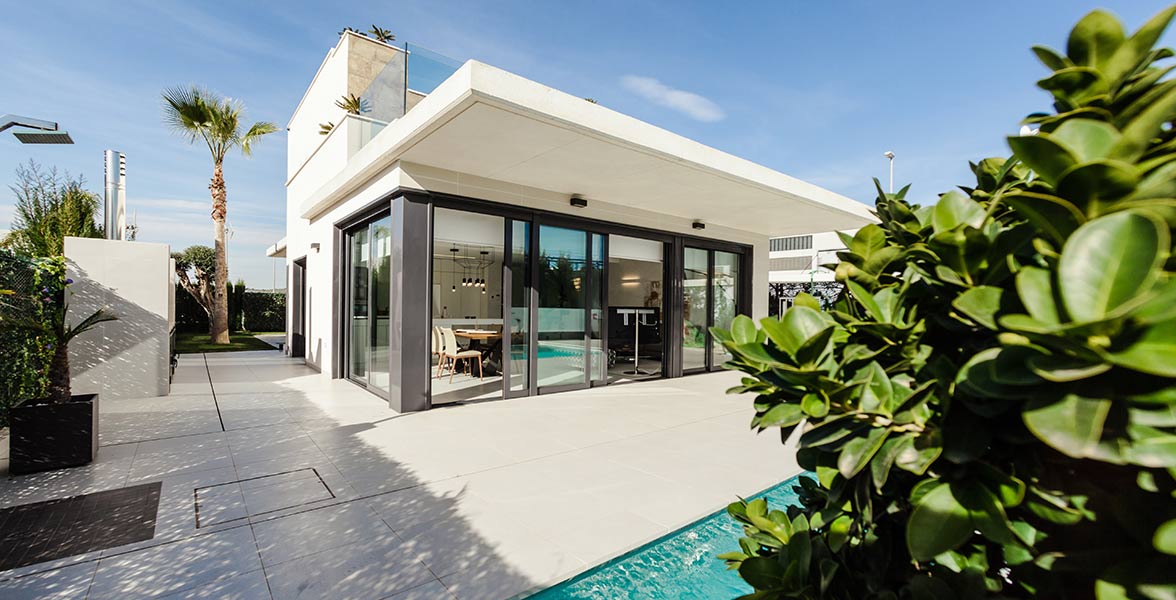
Doors in public areas of a hotel serve design as well as functional purposes. Lobby entrance doors, restaurant entrances and meeting room doors contribute to the overall aesthetic of the property and must withstand far higher cycle counts than typical residential or commercial applications. Aluminium-framed glass door systems are widely used in hotel public areas for their durability, low maintenance and ability to transmit natural light. Pivot doors and oversized entrance configurations are increasingly specified in lifestyle and boutique properties where architectural statement is a design priority.
Window systems and thermal performance
Hotel windows serve multiple functions: they must provide natural light, control solar heat gain, meet acoustic performance requirements and contribute to the building’s overall energy efficiency. In the United States, windows in commercial buildings must meet ENERGY STAR or equivalent energy performance standards. Double-glazed aluminium window systems with thermally broken frames significantly outperform older single-glazed systems in both thermal and acoustic performance. For properties in hot climates such as Texas, low-e glass coatings that reduce solar heat gain can deliver substantial reductions in cooling energy consumption.
uPVC window systems
uPVC — unplasticised polyvinyl chloride — window systems offer an alternative to aluminium for hotel renovation projects where thermal performance and low maintenance cost are priorities. Multi-chambered uPVC frames provide excellent insulation values and are inherently resistant to corrosion, making them particularly suitable for coastal or humid environments. Modern uPVC systems are available in a range of profile designs and colour finishes and can accommodate double or triple glazing configurations. Their lower thermal conductivity compared to aluminium results in reduced condensation and improved acoustic performance.
Sourcing and supply chain
Aluminium door and window systems for hotel renovation projects are widely manufactured in China, where production technology, quality and cost competitiveness are globally recognised. However, international sourcing of windows and doors requires careful attention to product certification — systems must be tested and certified to US standards for water resistance, air infiltration and structural performance. Custom sizing, which is the norm in renovation projects, adds complexity to the manufacturing process and requires detailed shop drawings and careful factory coordination. Lead times from order to delivery typically range from twelve to sixteen weeks.
Our approach
Elite Edge Resources supplies aluminium and uPVC door and window systems for hotel renovation and new construction projects, sourced directly from our manufacturing partners in China. We work from architectural drawings to develop custom configurations, confirm all required performance certifications and manage production, inspection and logistics through to delivery at the job site. Our team coordinates closely with project managers and contractors to ensure that door and window schedules align with construction timelines and that installation can proceed without delay.
Conclusion
Doors and windows are foundational to the performance, comfort and efficiency of a hotel property. Upgrading these systems in a renovation project delivers measurable benefits in acoustic quality, energy costs and guest satisfaction — benefits that translate directly to stronger operating performance and asset value. Elite Edge Resources brings the product knowledge, factory relationships and logistics capability to deliver door and window solutions that meet the technical demands of hospitality and the expectations of your guests.
