

Modular Kitchens and Cabinetry in Hospitality: Where Efficiency Meets Design
Kitchens and cabinetry play a critical role across the full spectrum of hospitality projects — from hotel suite kitchenettes and extended-stay properties to restaurant back-of-house fit-outs and staff facilities. The challenge in hospitality kitchens is balancing design sophistication with the practical demands of commercial use: surfaces must be durable and easy to clean, configurations must maximise limited space and hardware must withstand far more intensive daily use than in a residential setting. This month’s blog explores the key considerations in specifying and sourcing modular kitchen and cabinetry systems for hotel and hospitality applications.
What makes hospitality cabinetry different
Cabinetry in a hotel environment faces demands that residential products simply cannot sustain. Daily exposure to moisture, cleaning agents and heavy use requires moisture-resistant panel construction, durable edge banding and hardware rated for tens of thousands of cycles. Soft-close hinges and drawer slides should be specified to commercial ratings — typically one hundred thousand cycles or more — rather than the lower residential equivalents. Surface finishes, whether matte lacquer, wood veneer or thermally fused laminate, must resist scratching and staining while maintaining their appearance over years of intensive use.
Extended stay and suite kitchenettes
The extended-stay segment continues to grow strongly across the United States, and the in-room kitchenette is a defining feature of this category. Brands such as Residence Inn, Home2 Suites and Extended Stay America all specify kitchenette configurations that must meet both brand standards and practical usability requirements. A well-designed kitchenette combines adequate storage, a functional work surface, appliance integration and a coherent visual design that complements the room’s overall aesthetic. Modular cabinetry systems sourced directly from factory partners allow for precise customisation of dimensions and finishes to suit each brand’s specifications.
Design trends in hospitality cabinetry
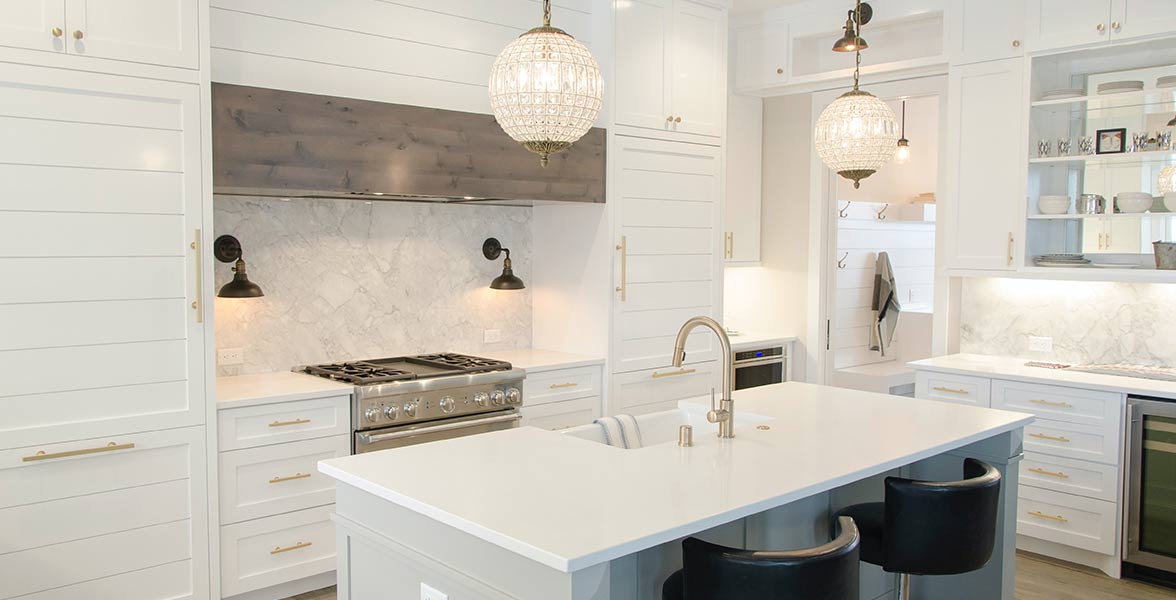
Current trends in hospitality cabinetry favour clean, handle-free designs with push-to-open or integrated grip profiles that create an uncluttered, modern look. Two-tone cabinet schemes — combining a light upper cabinet with a darker lower or a wood-tone element alongside a painted finish — add visual depth and interest. Quartz and engineered stone countertops have largely replaced laminate surfaces at the midscale tier and above, offering superior durability, stain resistance and perceived value. Integrated lighting under upper cabinets also adds a premium touch that photographs well for marketing purposes.
Restaurant and food service cabinetry
For hotel food and beverage outlets, cabinetry must meet both front-of-house design standards and back-of-house functional requirements. Front-of-house millwork — service stations, bar cabinetry, host stands and display cases — is a visible expression of the restaurant’s brand and must be built and finished to a high standard. Back-of-house cabinetry must meet commercial food service requirements for cleanability and durability. Coordinating both through a single supply partner simplifies procurement and ensures visual consistency between the guest-facing and operational spaces.
Lead times and project planning
Custom and semi-custom cabinetry sourced from overseas manufacturing partners typically requires fourteen to eighteen weeks from order confirmation to delivery at the US job site. This includes production, quality inspection, container loading, ocean freight, customs clearance and domestic trucking. Project managers must place orders well in advance of the installation window and coordinate deliveries with the overall construction schedule. Unlike standardised furniture, cabinetry is dimension-specific and cannot be easily substituted at short notice if delivery is delayed.
Our approach
Elite Edge Resources sources and supplies modular kitchen and cabinetry systems for hospitality projects directly from our manufacturing partners in China. We work from client specifications and architectural drawings to develop custom configurations in brand-compliant finishes, and we manage the full production and logistics process through to delivery at the job site. Our quality control team conducts factory inspections before shipment, and we provide complete documentation to support contractor installation. From kitchenettes to full restaurant millwork, we deliver cabinetry solutions that combine design quality with long-term durability.
Conclusion
Cabinetry and kitchen systems are a significant component of any hospitality renovation, and getting the specification, quality and logistics right requires both product expertise and supply chain management. Elite Edge Resources brings factory-direct access, quality oversight and end-to-end logistics to every cabinetry project, delivering solutions that meet your brand’s standards, your contractor’s timelines and your guests’ expectations for quality and design.
